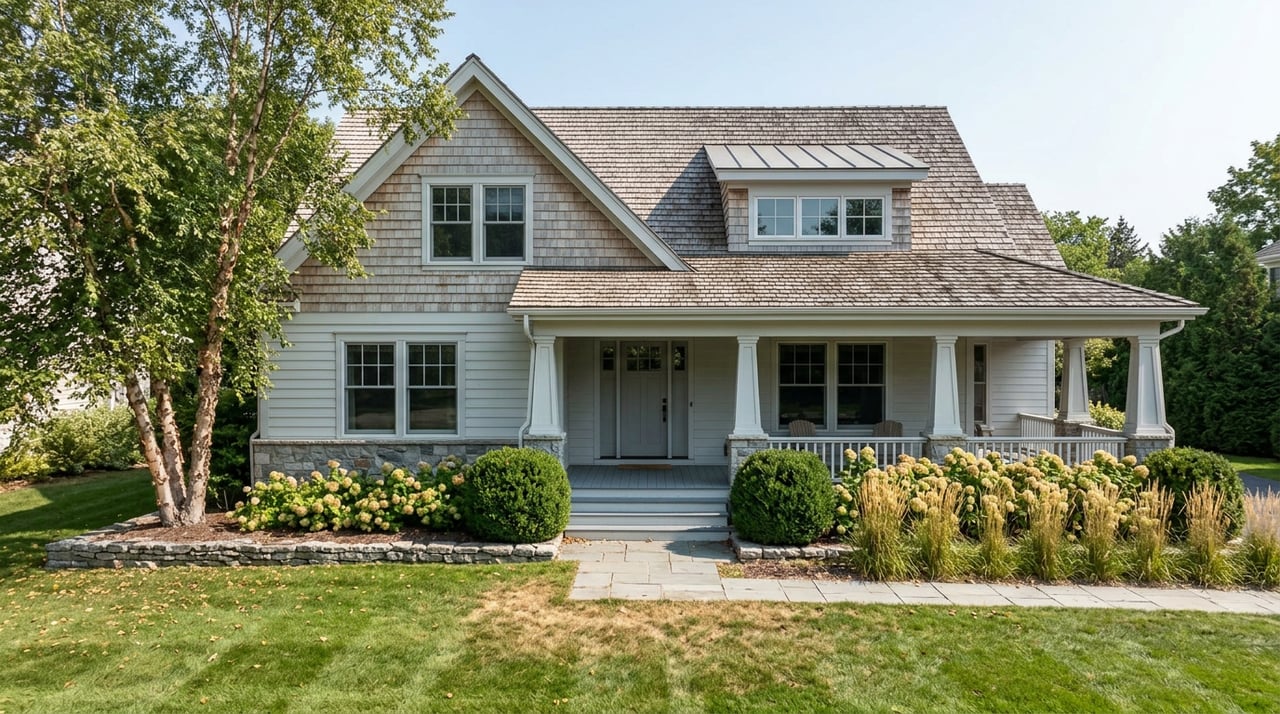
"There's not a future where I think arsenic is going to become less common in groundwater in Minnesota," a University of Minnesota water extension educator told MinnPost in a story published earlier this month. She was talking about the state as a whole, but the sentence lands differently if you own, or are about to buy, a home in Shorewood.
Many of Shorewood's homes are not on city water. They're on private wells, and the paperwork that changes hands at closing tells a buyer almost nothing about what comes out of the tap.
That gap between what gets disclosed and what actually gets tested is the thing worth understanding before you list a Shorewood well home or write an offer on one, because the city itself has started treating that gap as a problem serious enough to legislate around.
What the disclosure form actually asks
Minnesota Statutes section 103I.235 requires a seller to disclose, in writing, whether a well exists on the property and whether it's in use, not in use, or sealed, before a purchase agreement is signed. It's a real legal obligation.
The form confirms the well exists. It says nothing about what's in it.
Shorewood's own city government is direct about this on its resident-facing pages: private well owners are responsible for their own water testing, full stop. The city tests its municipal wells monthly for coliform bacteria and annually for nitrates, arsenic, lead, and other contaminants under state Safe Drinking Water Act rules. If your water comes from a private well instead, none of that happens unless you make it happen yourself.
The rule the city already passed
Shorewood didn't just note the well-versus-city-water split and move on. The city council adopted Ordinance 624 after a public hearing in September 2025, and as of January 1, 2026, any new residential construction or full reconstruction in Shorewood is required to connect to municipal water if service is available to the property. A teardown-rebuild on a well lot with city water at the curb no longer gets to keep the well as the primary water source. That decision has already been made for you.
The city's own Municipal Water Strategy documentation goes further. Alongside the new construction rule, it lists a "Point of Sale" concept still under research: extending the same mandatory-connection requirement to homes that change hands, not just homes that get rebuilt. That policy hasn't been adopted. But it's on the table in the city's own planning materials, which means a buyer closing on a Shorewood well home today could plausibly be the seller of that same home under a different set of rules a few years from now.
How many Shorewood homes are on wells?
City records show that only around 50 percent of Shorewood's residential properties are served by municipal water in the first place, and of that group, roughly a quarter have never connected even though the line runs past their property. Run the math and something closer to a third of Shorewood households, not half, are actually drinking municipal water day to day. The rest are on wells, either because service never reached them or because they chose not to hook up.
That choice has a price attached now. The city's Water Connection Program sets the hookup cost at a $10,000 Water Availability Charge, financed over ten years, plus the cost of running the line and plumbing into the house. A separate fee, roughly $10 a quarter for properties that have water available but aren't connected, is scheduled to take effect in 2027 under the city's Long-Term Financial Management Plan.
Meanwhile the water that does run through city pipes carries its own quality history. When Shorewood's Amesbury wells turned up a trace amount of PFAS in monitoring, the city disclosed it, explained the level was well under the state health guidance, and opted into the DuPont and 3M class-action settlements over PFAS contamination back in late 2023. That's a level of scrutiny and public disclosure that private wells in the same city simply don't get, because no one but the well owner is required to look.
What a well actually costs to check
Minnesota Department of Health data covering wells tested from 2008 through 2022 found that more than 10 percent of new wells statewide came back above the health-based limit for arsenic, and the department's broader guidance notes that detectable arsenic, at some level, has shown up in nearly half of new wells drilled since testing began in 2008. The same MDH data flags the area in and around the Twin Cities, working west, as where elevated levels are most likely to turn up. Shorewood sits inside that zone.
The frustrating part, according to the MDH hydrologist quoted in that MinnPost story, is that arsenic doesn't follow a predictable pattern. "One neighbor could have high arsenic, and the neighbor next door might not have any at all," she said. A clean test on the house down the street tells you nothing about the well in your own yard.
Here's roughly what the choices look like in dollars, based on the figures above:
| Action | Approximate cost | What it tells you |
|---|---|---|
| Well water test (arsenic, nitrate, bacteria) | Well under $200 | Whether your specific well has a problem worth solving |
| Reverse osmosis treatment system, if needed | $5,000 and up | Removes arsenic and several other common contaminants |
| Connect to city water (where available) | $10,000 WAC, financed over 10 years, plus the cost of running the line and plumbing into the house | Removes the testing burden entirely |
| No water test before resale | $0 upfront | Leaves water quality as an unknown for the next owner |
What this means if you're on either side of the table
If you're selling a Shorewood home on a private well, testing it before you list costs a fraction of what a nervous buyer's inspection contingency could cost you later. A clean result becomes a selling point you can hand over with confidence. A result that needs treatment becomes a negotiating item you control, rather than a surprise a buyer's inspector finds during due diligence.
If you're buying, ask for a recent well test. Given how unevenly arsenic and other contaminants show up well to well, a test from three houses down tells you nothing useful about the one you're buying. And if the home is a teardown candidate, confirm before you close whether municipal water is already available to that lot, because Ordinance 624 means you may not have the option to keep the well once you rebuild.
A few questions that come up
If I tear down and rebuild in Shorewood, do I have to connect to city water? Yes, if municipal service is available to the property. That's been required since Shorewood's Ordinance 624 took effect on January 1, 2026.
Could Shorewood require water hookups at the time of sale in the future, not just new construction? The city's own planning documents describe a point-of-sale connection requirement as a concept currently being researched. It has not been adopted, but it's part of the city's active water strategy discussion.
Is city water actually better than well water in Shorewood? It's tested more often and disclosed publicly, including the PFAS results from Shorewood's own municipal wells. City water is also measurably softer, around 19 grains per gallon versus most private wells, which typically means less softener salt.
A well disclosure form does its job. It just isn't the job most buyers assume it's doing. If you're weighing a purchase or a sale on a Shorewood well property and want a clearer read on what the water history actually says, and what it might cost to change it, The Weinstock Group is a good place to start that conversation. Schedule a complimentary consultation and we'll walk through the specifics with you before you're standing at the closing table wondering what you didn't ask.
This article is general information, not legal, tax or financial advice. Consult a qualified professional about your situation.
