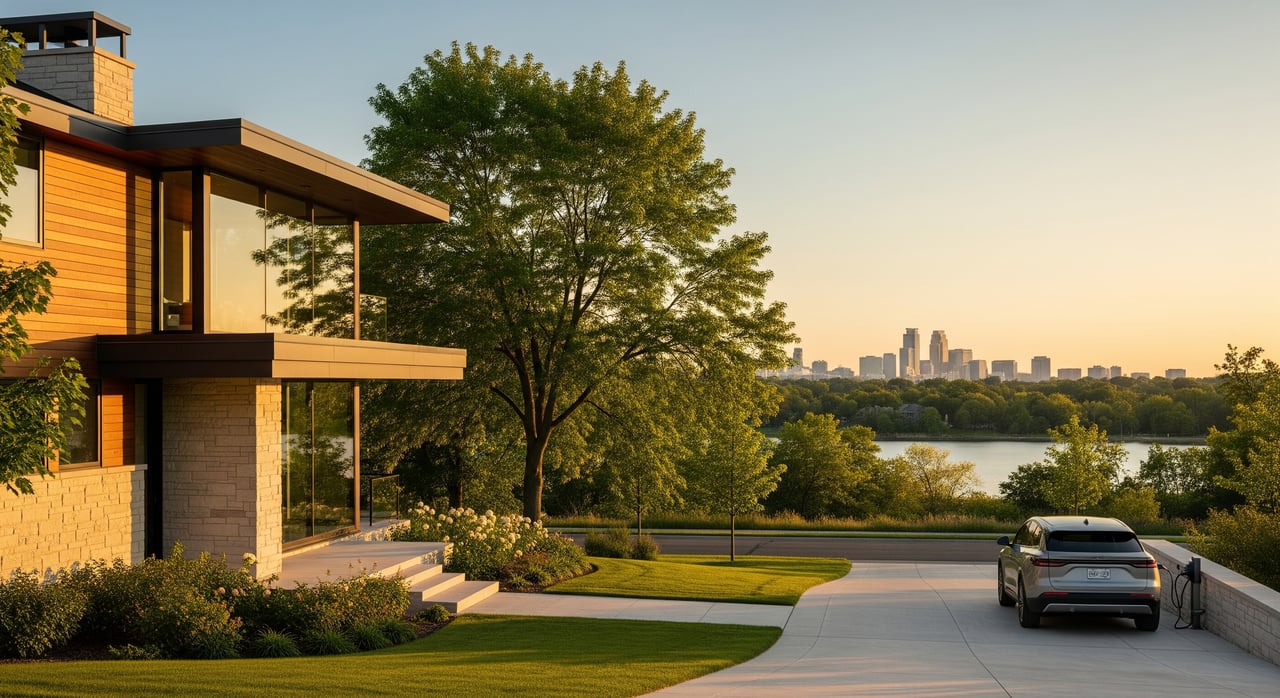
Is the Chanhassen-to-Minneapolis commute worth it for your lifestyle? If you are weighing a move west of the city, the answer depends on when you travel, how you get there, and what you value most: time, cost, or convenience. You want a clear picture before you buy. Below, you will find realistic time ranges, route options, and simple checklists to help you plan with confidence. Let’s dive in.
Where Chanhassen sits and typical times
Chanhassen is southwest of Minneapolis. The straight-line distance to downtown is about 20 to 25 miles, and the usual driving distance is in the low 20s depending on your exact start and end points.
On a typical weekday, off-peak drives take about 25 to 40 minutes into downtown. During morning and evening rush (roughly 6:30 to 9:00 AM and 4:00 to 6:30 PM), you should plan for 35 to 60 minutes or more. Winter weather, crashes, and construction can add time, so allow an extra 15 to 30 percent on stormy or incident-prone days.
Driving: fastest off‑peak, flexible always
Most drivers connect to Minneapolis using the I‑494 and I‑35W corridors, with local state routes feeding in based on your neighborhood. Driving gives you door-to-door control and is often the quickest option outside rush periods or if you work off-hours.
The trade-offs are predictable: congestion at peak times, downtown parking costs, and weather impacts. If you plan to drive most days, compare your monthly fuel and parking costs to transit options so you see the full picture.
Express bus from park‑and‑ride
Suburban express buses run from park‑and‑ride lots in Carver County and nearby suburbs into Minneapolis during peak hours. Service is provided by SouthWest Transit and Metro Transit. Most trips run about 45 to 75 minutes depending on route, stops, and highway traffic.
The upside is lower stress and the ability to work, read, or relax on the ride. The downside is less flexibility due to fixed schedules and limited midday or weekend options. Many park‑and‑rides are free (rules vary), and you will want a reliable way to reach the lot by car, drop‑off, or bike.
Rail today and what’s next
Chanhassen does not currently have direct heavy or light rail service. The planned Southwest LRT (Green Line Extension) continues to evolve, and timelines can change. As new stations come online in parts of the southwest metro, travel patterns may shift. Until then, driving and express buses remain the primary options.
Carpool or vanpool
Carpools and employer vanpools can cut costs per rider and reduce driving stress. Where high-occupancy options exist, they can also save time. The trade-off is coordination and a more fixed schedule. Decide if this fits your workday flexibility.
Bike, e‑bike, and multi‑modal
A direct bike ride from Chanhassen to downtown Minneapolis is 20-plus miles each way, which is long for most daily commuters. Many riders choose a multi‑modal plan: bike to a transit stop or park‑and‑ride, then take an express bus the rest of the way. E‑bikes make longer segments more realistic.
The benefits are exercise, lower costs, and access to regional trails for more pleasant segments. Weather and winter conditions are the main limitations. Check your workplace for secure bike parking and shower access if you plan to ride regularly.
Trails and first/last‑mile options
Chanhassen and Carver County maintain multi‑use trails and local connections that tie into regional routes. These are great for getting to a nearby transit stop, running errands, or choosing a more scenic path for part of your commute.
Many high‑use trails are plowed in winter, but conditions vary by corridor. If you plan to bike to transit, confirm if your park‑and‑ride or station has sheltered racks or secure bike parking.
Match your commute to job location
Not all destinations are equal. Downtown Minneapolis draws many commuters for corporate, legal, finance, and healthcare roles, and it often means longer drive times and parking costs. If your job is in Minnetonka, Eden Prairie, Edina, Bloomington, or near the airport area, your commute from Chanhassen can be shorter, especially outside the downtown core.
Reverse commutes to west‑suburban campuses are often quicker than inbound trips to downtown. Align your route with your actual work address and hours before you decide on a home base.
What to expect by mode and time
- Driving off‑peak: about 25 to 40 minutes to downtown for many origins and routes.
- Driving at rush: commonly 35 to 60 minutes or more during morning and evening peak windows.
- Express bus: about 45 to 75 minutes, with more variability during highway congestion.
- Multi‑modal: depends on your first/last‑mile plan and the bus you catch. Build in buffer time for transfers.
Practical checklist before you buy
- Test your commute. Do a morning and evening dry run for your exact route and mode on typical weekdays.
- Compare costs. Weigh monthly parking and fuel against a transit pass or park‑and‑ride costs.
- Confirm schedules. Review peak‑direction express bus options for stops near your workplace.
- Plan for winter. Add 15 to 30 percent to your usual time on storm days and confirm your preferred winter route.
- Check first/last‑mile options. Identify the closest park‑and‑ride and bike or drop‑off access.
- Ask your employer. Confirm flexible hours, telework days, or vanpool options that could improve your commute.
- Consider daycare or pickups. Factor these into route choice and timing.
Time, cost, and convenience trade‑offs
If speed and schedule control matter most, driving typically wins outside peak periods and for off‑hours. If you want lower stress and lower parking costs, the express bus can be a great fit, especially if you can shift your hours or work remote a few days per week.
If you value an active lifestyle, use Chanhassen’s trail network for local trips and consider an e‑bike to reach transit. No matter your plan, a short trial week of routes and modes will tell you more than any estimate.
Flexible schedules and telework
A hybrid setup can transform the experience. Reducing on‑road days lowers monthly costs and gives you more control over when you drive. If your role allows it, consider stacking office days to avoid the worst peak times.
The bottom line
Chanhassen offers a practical balance of suburban living and access to Minneapolis. Your best commute depends on where you work, when you travel, and how you prefer to spend your time. With realistic expectations, a tested route, and a plan for winter, you can make a confident move.
If you want neighborhood‑level guidance on streets, park‑and‑rides, and timing from specific parts of Chanhassen, connect with Kristi Weinstock for a personalized plan that fits your lifestyle. Schedule a complimentary consultation.
FAQs
How long is the Chanhassen to downtown Minneapolis drive at rush hour?
- Expect about 35 to 60 minutes during typical morning and evening peaks, with longer times possible during incidents or winter weather.
Is there a good transit option from Chanhassen to downtown Minneapolis?
- Yes. Suburban express buses from park‑and‑rides serve downtown during peak hours. Trips are usually 45 to 75 minutes depending on route and traffic.
Will the Southwest LRT (Green Line Extension) improve Chanhassen commutes?
- It may change regional patterns as stations open, but Chanhassen is not currently a direct light‑rail stop. Driving and express buses remain the main options for now.
Can I bike from Chanhassen to Minneapolis daily?
- It is feasible for experienced riders or with an e‑bike, but most people choose to bike to a transit stop and ride an express bus for the longer segment, especially in winter.
